
Language
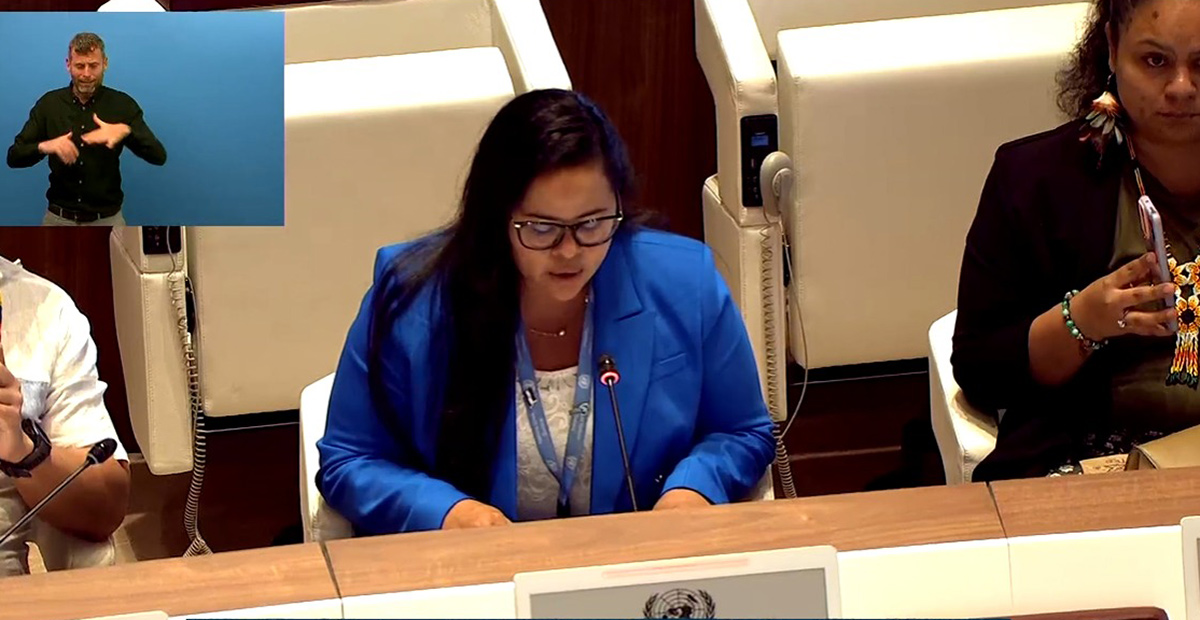
In the framework of the 18th session of the Expert Mechanism on the Rights of Indigenous Peoples (EMRIP) of the Human Rights Council of the United Nations (UN), the International Network for Human Rights in Europe (RIDHE), together with the Platform for Indigenous Peoples of Nicaragua and the Network of Indigenous Women, presented an urgent complaint about the systematic and structural regression of the rights of indigenous and Afro-descendant peoples in Nicaragua.
It is within this framework that the Director of Programs for Latin America, Winnye Bernard, denounced the recent Constitutional Reform in Nicaragua, approved in November 2024 and ratified in January 2025. He indicated that it represents a severe setback that weakens the autonomy of the Autonomous Regions of the North and South Caribbean Coast, home to more than 300 indigenous and Afro-descendant communities organized in 23 territories entitled under Law 445 on the Communal Property Regime.
Speaking at the world's main forum for indigenous peoples' rights, Bernard said that the new Article 132 in the country concentrates power on the presidential figure, subordinating regional and municipal bodies to a co-presidency that eliminates the functional autonomy of Territorial Governments and Regional Councils, in contravention of the UN Declaration on the Rights of Indigenous Peoples and Convention 169 of the International Labor Organization.
Additionally, the reform violates fundamental rights such as communal property, management of natural resources, cultural identity and the right to development with territorial and cultural relevance.
This situation has aggravated conditions of vulnerability, especially for indigenous and Afro-descendant women and girls, who have historically been discriminated against and face greater risks of violence, exclusion and criminalization. 14 specific cases were documented, evidencing threats to their life, security and political participation.
The RIDHE also denounced the increase in human rights violations, including more than 110 cases of territorial dispossession, illegal invasions, forced displacement, criminalization of indigenous and Afro-descendant leaders, and a pattern of impunity that deepens the humanitarian crisis.
Bernard concluded his speech with several demands to the Expert Mechanism and the Office of the Special Rapporteur on the Rights of Indigenous Peoples to urge the Nicaraguan State to:
Repeal or revise constitutional reforms that violate autonomy and collective rights.
Ensure prior, free and informed consultation, in accordance with ILO Convention 169 and international standards.
Conduct an on-site visit or independent international mission to assess the living conditions, security and rights of communities.
Stop the criminalization of territorial leaders and defenders, especially indigenous and Afro-descendant women, and investigate violence and land dispossession with due diligence.
“This regression not only threatens fundamental rights, but also the very existence of these peoples as collective subjects of law,” RIDHE denounced.
The RIDHE has been working for more than a decade from a human rights perspective with indigenous and Afro-descendant peoples in Latin America, accompanying processes of territorial defense, organizational strengthening and international complaint. It promotes access to justice, the recognition of their collective rights and the protection of women and girls from historical discrimination and structural violence.
“Every intern here is a living proof of the human capacity to overcome the most challenging circumstances...
DOWNLOAD THE VIDEO



This site is protected by reCAPTCHA and the privacy policy And the Terms of Service from Google.